
Understanding the Root Cause of Recurring Back Pain and How to Find Lasting Relief
If you’ve ever thrown your back out while gardening, lifting a heavy box, helping someone move, or even after your first round of golf of the season, you’re not alone. In fact, 50–80% of people will experience low back pain at some point in their lives. While the pain may eventually settle down, many people find that it keeps returning—and often for no apparent reason.
At Lake Street Chiropractic in St. Catharines, we believe that treating the source of your pain—not just the symptoms—is the key to long-term relief.
Why Does Low Back Pain Keep Coming Back?
Many people assume that once the pain disappears, the problem is gone. Unfortunately, that’s often not the case. Low back pain frequently returns because the underlying issues that caused the injury were never fully corrected.
Common causes include:
- Lifting something too heavy
- Workplace injuries
- DIY home projects
- Gardening
- Moving furniture
- Playing golf or other seasonal sports
- Sudden twisting or bending movements
- Poor posture and prolonged sitting
Often, it isn’t the biggest lift that causes the injury—it’s simply one movement too many on tissues that were already under stress. It’s not picking up the laundry basket, or paper off the floor, it was the gardening or deck building the week before.
What Actually Causes Low Back Pain?
Low back pain is usually the result of one or more problems occurring together, including:
Spinal Joint Dysfunction (Vertebral Subluxation)
Chiropractors often describe this as a vertebral subluxation, where one or more spinal joints are not moving properly. Although many people picture a bone being “out of place,” it’s more accurate to think of the joint becoming restricted or fixated, preventing normal movement.
When a spinal joint isn’t functioning correctly, surrounding muscles tighten to protect the area, leading to:
- Muscle spasms
- Stiffness
- Reduced movement
- Local inflammation
- Pain
- Nerve Irritation
Muscle and Ligament Strains
Overstretching or overloading the muscles and ligaments of the lower back can strain them.
This can create:
- Pain
- Tightness
- Swelling
- Reduced mobility
Without proper treatment, these tissues may heal with ongoing tension, making future injuries more likely.
Disc Bulges and Herniations
Between each vertebra sits a spinal disc that acts as a shock absorber. When a disc bulges or herniates, it may place pressure on nearby nerves.
This can cause:
- Sciatica
- Pain down the back of the leg
- Pain into the front of the thigh or groin
- Numbness
- Tingling
- Weakness
Of these common causes, disc injuries are typically the more severe form of low back dysfunction and often require a longer treatment program.
Why Do You Keep Re-Injuring Your Back?
One of the biggest reasons low back pain returns is because the deep stabilizing muscles of the spine become weak after an injury.
Every episode of back pain causes the small muscles between the vertebrae to shut down and weaken. Even though your pain may improve, these muscles often remain weak, smaller (atrophied), and slow to react. Without rebuilding these important stabilizers, your spine becomes more vulnerable to future flare-ups.
Pain relief does not necessarily mean full recovery. You must strengthen the spinal muscles.
Getting the Right Diagnosis
Finding lasting relief starts with understanding exactly what’s causing your pain.
At Lake Street Chiropractic, your comprehensive consultation and examination will include health history, chiropractic examination including range of motion, muscle and nerve tests, and possibly radiographs. Then a treatment plan is created to address your specific needs.
Our Integrated Approach to Low Back Pain Treatment
At Lake Street Chiropractic, we combine several evidence-informed therapies to help relieve pain, restore movement, and reduce the risk of future injuries.
Chiropractic Adjustments
Gentle spinal adjustments help restore normal joint movement and improve spinal function.
Depending on your condition, adjustments may involve traditional clicking-style adjustment techniques or low-force methods designed for your comfort.
Benefits include:
- Improved mobility
- Reduced joint stiffness
- Better spinal alignment
- Decreased muscle tension
Active Release Techniques® (ART)
Active Release Techniques® is one of the most effective treatments for tight, injured soft tissues.
ART helps break down scar tissue, improve mobility, and restore normal muscle function.
For low back pain, treatment often focuses on muscles including:
- Erector spinae
- Quadratus lumborum (QL)
- Gluteal muscles
- Iliopsoas (hip flexor)
- Multifidus / Spinal rotators
Reducing muscle tension allows your spine to move more naturally and comfortably. This helps restore muscle to alleviate lower back pain.
Acupuncture
When pain is severe, acupuncture can help calm irritated tissues and reduce muscle tension.
Many patients find acupuncture especially helpful during the early stages of recovery before progressing to rehabilitation exercises.
Active Exercise Rehabilitation
This is where long-term success happens. Active Exercise Rehabilitation exercises are the glue that helps chiropractic adjustments hold. Exercise rehab focuses on rebuilding the deep stabilizing muscles that support your spine.
Your personalized program may include exercises that improve:
- Core stability
- Balance
- Spinal control
- Back and hip strength
- Flexibility
- Endurance
The goal is not just to feel better—but to make your back more resilient for everyday life.
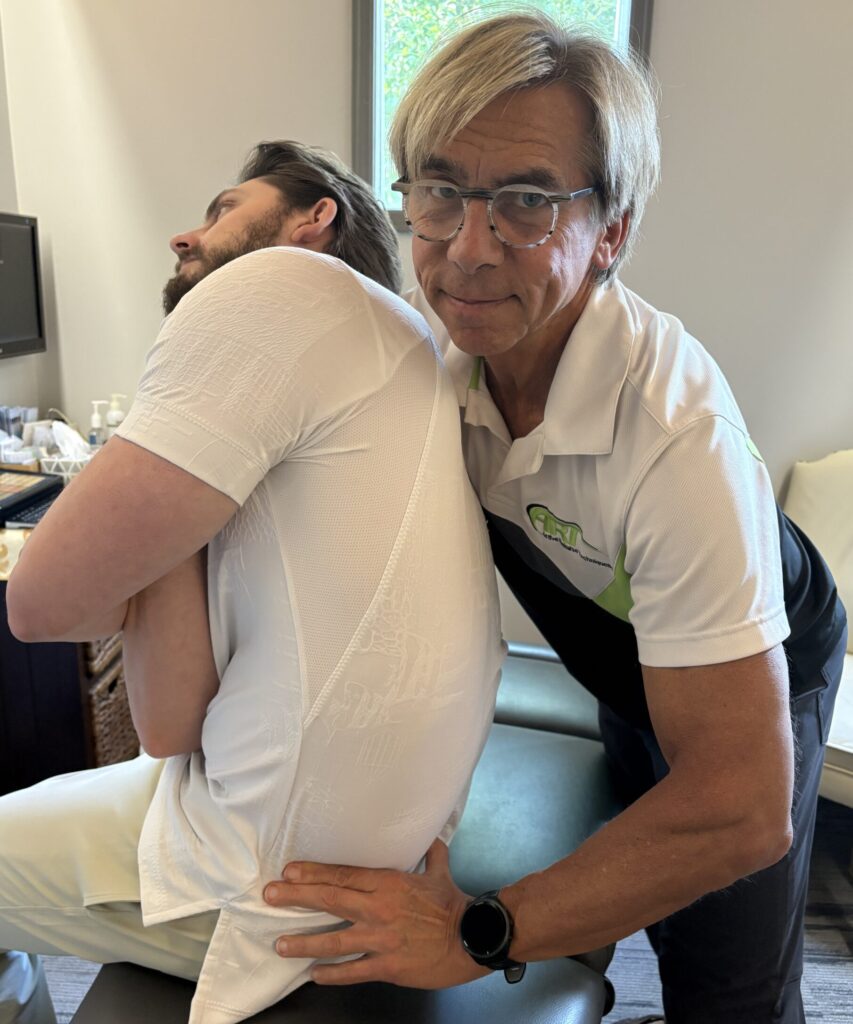
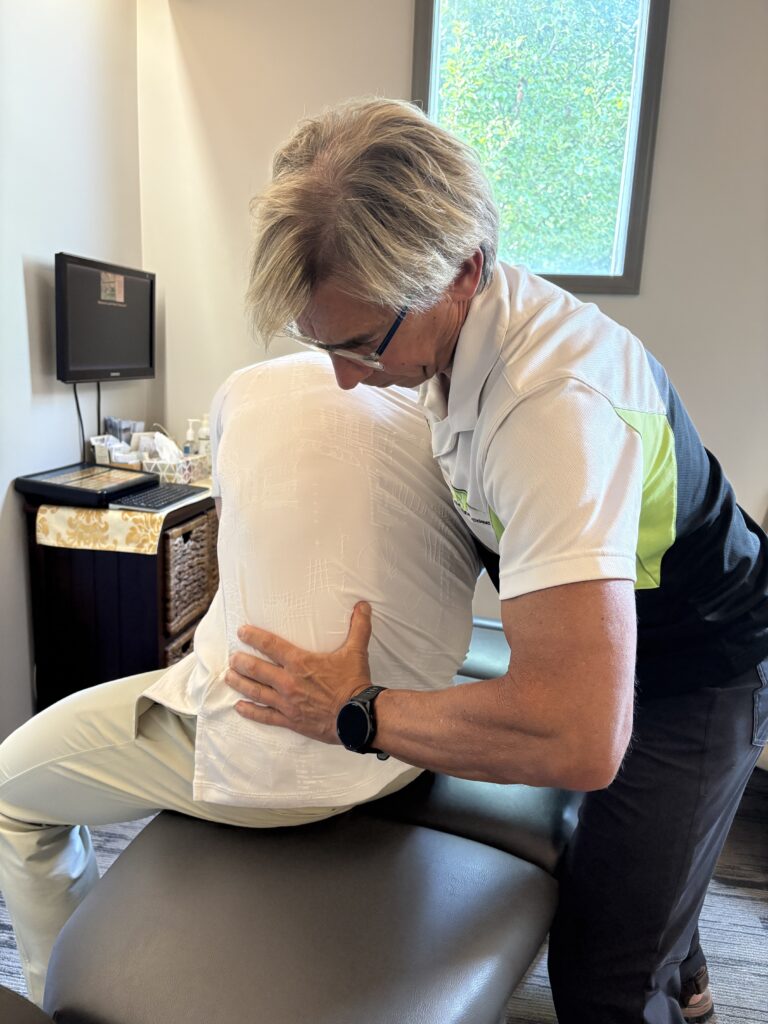
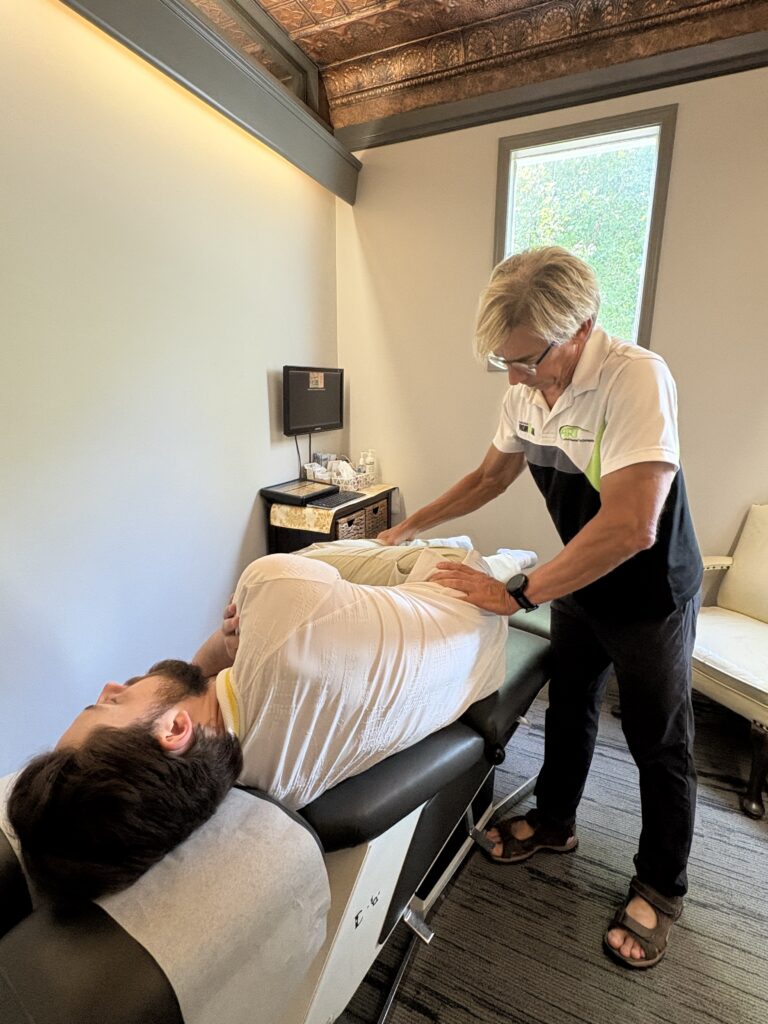
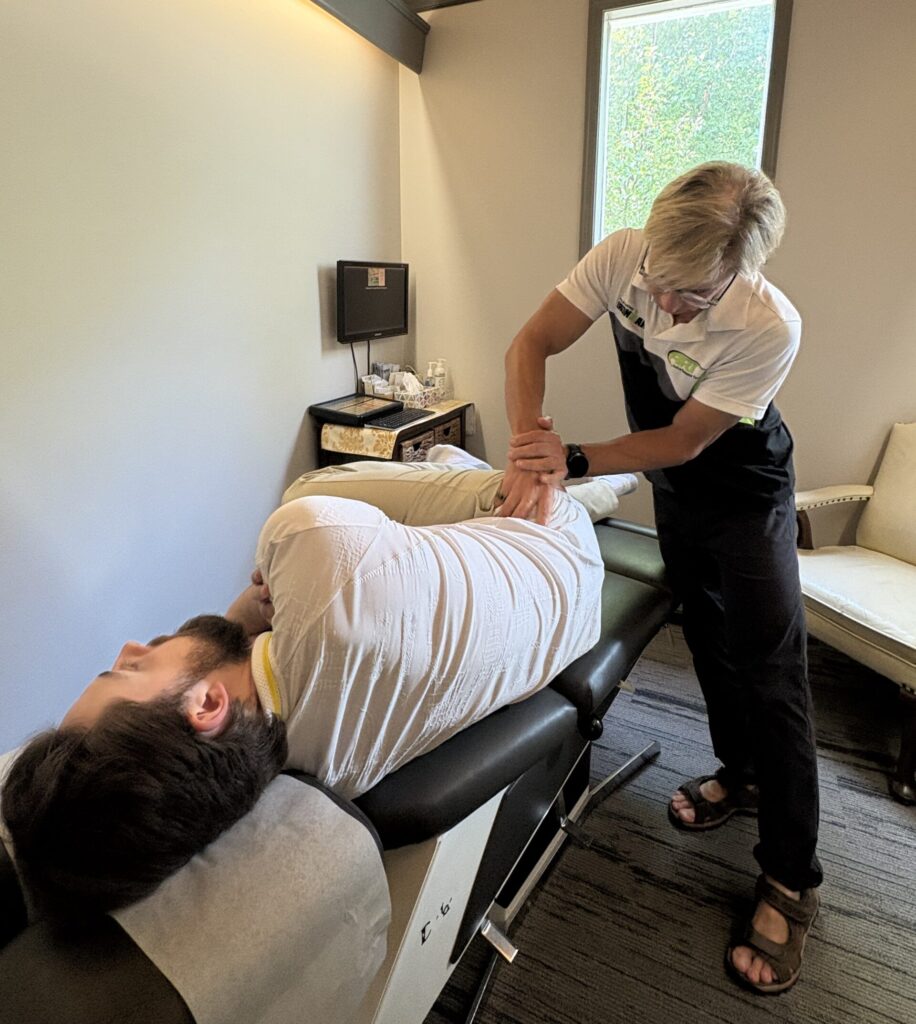
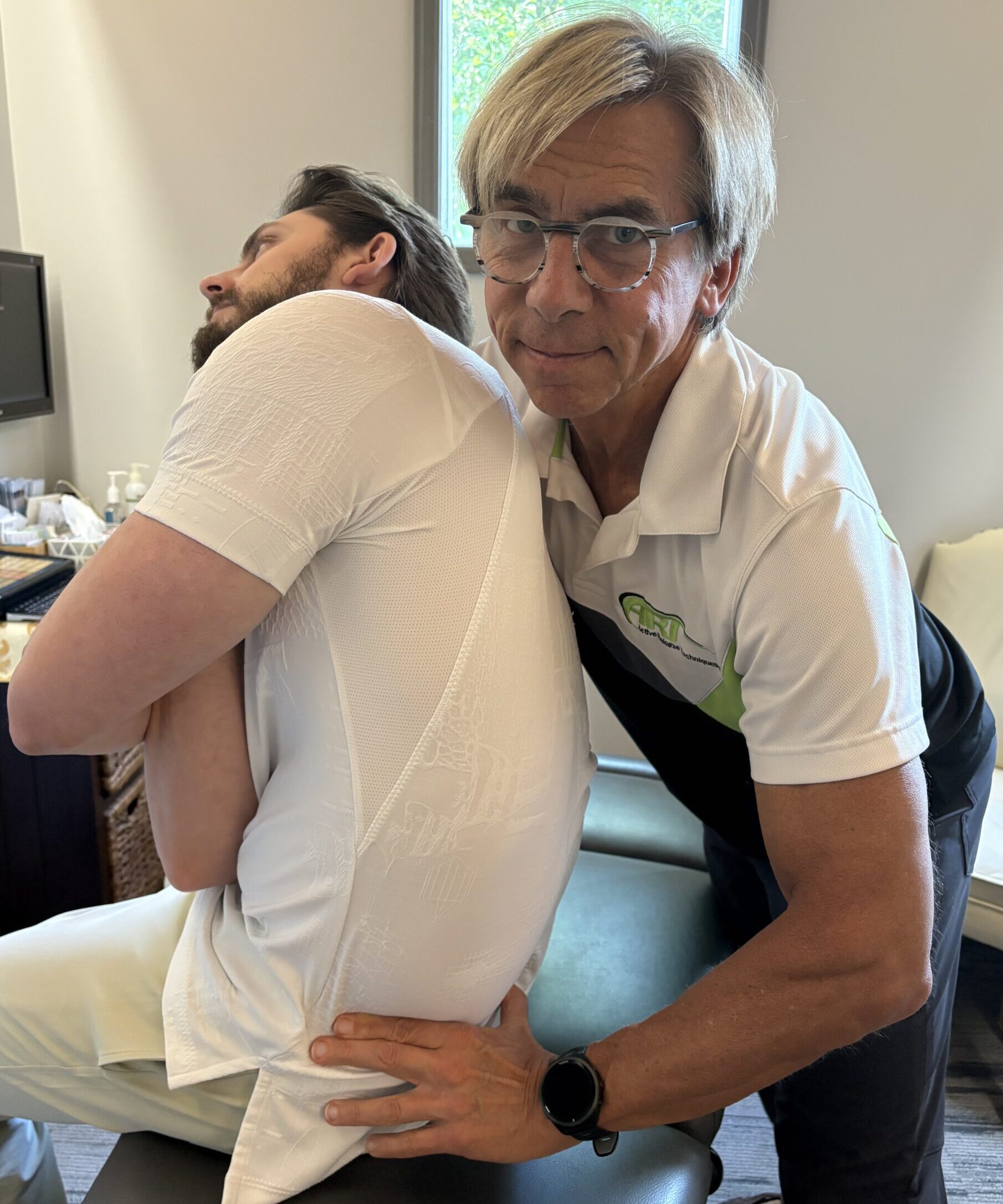
Dr. Geron Cowherd, DC, treating low back pain with Active Release Techniques® (ART)
Preventing Future Back Pain
Once your pain has improved, ongoing maintenance becomes important.
Helpful strategies include:
- Regular strengthening exercises
- Daily stretching
- Good lifting mechanics
- Staying physically active
- Maintaining good posture
- Preventative chiropractic check-ups
When Should You See a Chiropractor?
If your back pain:
- Keeps returning
- Lasts more than a few days
- Travels into your leg
- Causes numbness or tingling
- Limits your ability to work, exercise, or enjoy life
It’s time to have it properly assessed.
Early treatment often means faster recovery and fewer recurring episodes.
For many patients, periodic chiropractic “tune-ups” every few weeks or once a month can help detect minor restrictions before they become major problems.
Get Back to Doing What You Love
Whether you strained your back gardening, helping someone move, tackling a home renovation, or enjoying your favourite summer sport, you don’t have to keep living with recurring pain.
At Lake Street Chiropractic, our team combines chiropractic care, Active Release Techniques® (ART), acupuncture, and personalized exercise rehabilitation to help address the root cause of your pain—not just the symptoms.
Book your appointment online today or give us a call to start your recovery. We’ll help you move better, feel better, and get back to the activities you enjoy.